
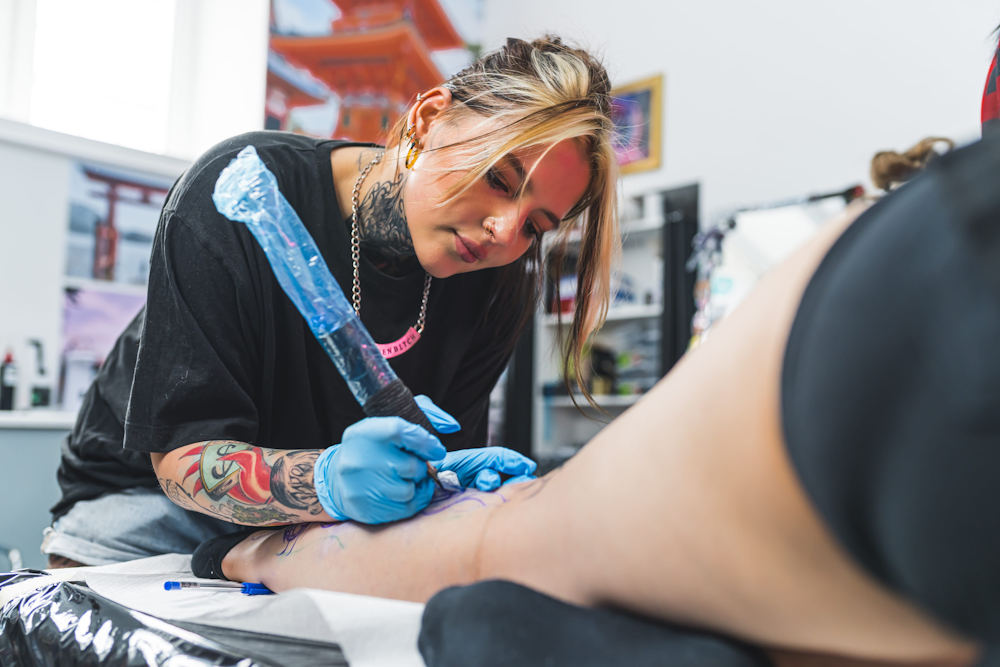
If your employees have a chance of coming into contact with blood or other potentially infectious materials (OPIM) like bodily fluids, you are required by federal law to have a written Exposure Control Plan (ECP). This requirement is dictated by OSHA 29 CFR 1910.1030, also known as the Bloodborne Pathogens Standard.
Many professions require exposure to body fluids or potentially infectious materials like tattoo artists, dentists, child care workers, beauty consultants, healthcare providers, phlebotomists, and more. These infectious materials can contain infectious bloodborne pathogens like Hepatitis B (HBV) or HIV. It’s important for employers and employees to be aware of these risks and emphasize workplace safety. One of the most critical documents your business requires is an Exposure Control Plan (ECP).
What is an Exposure Control Plan (ECP)?
An Exposure Control Plan is a required document that outlines how your business intends to eliminate or prevent exposure to bloodborne pathogens (BBP), such as Hepatitis B (HBV), Hepatitis C (HCV), and Human Immunodeficiency Virus (HIV) in the workplace. The ECP will detail the following:
- What are the risks? Exposure to infected blood and Other Potentially Infectious Materials (OPIM) that can spread disease.
- What are the diseases? HBV, HCP, HIV, etc.
- How are these risks present in the job duties? Blood splatter, sick patients, etc.
- What precautions must be taken to prevent risk? Engineering controls, personal protective equipment and workplace practices.
- What should one do if exposed to infectious materials? What actions to take place immediately after exposure.
- What training is required? Annual bloodborne pathogens training is required by law.
An ECP is a vital tool for employee safety. It provides clear instructions on what to do in the event of a needle stick, a blood spill, or accidental contact with hazardous materials. By standardizing these procedures, you reduce the risk of workplace transmission and demonstrate a commitment to your team’s well-being.
It is not enough to simply have a verbal agreement or a set of unwritten rules. OSHA requires a formal, accessible, and updated document that serves as the “blueprint” for your safety procedures. An effective ECP protects workers from infection and protects the business from the financial consequences or legal liability of non-compliance.
Why Your Business Needs an ECP
An ECP is required by law and is a way to protect your employees. If an OSHA inspector visits your facility due to a routine inspection or a reported incident, the ECP is often the first document they will want to see. Failure to produce a site-specific plan can result in penalties or legal liability.

Core Components of an OSHA-Compliant ECP
An ECP cannot be generic and it will be different based on the profession or activities involved. For example, a dentist will have a different ECP than a tattoo artist. That is because they handle bodily fluids differently and for different purposes. A tattoo artist might be exposed to more blood than a dentist. According to the federal standard, every ECP must include the following core components:
1. Exposure Determination
You must identify and document every job classification within your company where employees have occupational exposure. This is broken down into two lists:
- List A: Job titles in which all employees have occupational exposure (e.g., dental hygienists, phlebotomists).
- List B: Job titles in which some employees have occupational exposure based on specific tasks (e.g., a school janitor who may occasionally clean up a blood spill).
When making these determinations, you must ignore the use of Personal Protective Equipment (PPE). Even if an employee wears gloves, if the task involves potential contact with blood, they have occupational exposure.
2. Methods of Implementation and Control
This section describes how you will protect employees. OSHA follows a “Hierarchy of Controls” which prioritizes certain safety measures over others:
- Universal Precautions: Treating all human blood and certain body fluids as if they are known to be infectious.
- Engineering Controls: These are physical devices that isolate or remove the hazard from the workplace. Examples include sharps disposal containers and self-sheathing needles.
- Work Practice Controls: These are procedural changes that reduce the likelihood of exposure, such as prohibiting the recapping of needles by hand or forbidding eating in areas where blood is handled.
3. Personal Protective Equipment (PPE)
Your ECP must detail the types of PPE provided to employees, such as gloves, masks, gowns, and eye protection. As the employer, you are responsible for providing this equipment at no cost to the employee. You must also ensure it is cleaned, repaired, or replaced as needed.
4. Hepatitis B Vaccination
You must offer the Hepatitis B vaccination series to all employees who have occupational exposure. This must be offered after the employee has received the required BBP training and within 10 working days of their initial assignment.
- The vaccination must be free of charge.
- If an employee chooses to decline the vaccine, they must sign a formal declination form.
- If they change their mind later while still in a high-risk role, you must still provide the vaccine at that time.
5. Post-Exposure Evaluation and Follow-Up
If an exposure incident occurs (such as a needle stick or splash to the eyes), the ECP must outline a confidential medical evaluation and follow-up procedure. This includes documenting the route of exposure, identifying the source individual (if possible), and testing the employee’s blood for infection, provided they consent.
6. Training and Communication
All employees with occupational exposure must receive training at the time of their initial assignment and at least annually thereafter. This training must be provided in a language and at a literacy level that the employees understand.
American BLS offers a comprehensive Bloodborne Pathogens Course designed to meet these federal training requirements. For businesses with a Spanish-speaking workforce, we also offer the Curso de Patógenos Transmitidos por la Sangre to ensure full comprehension across your team.

State-by-State Variations
While the federal OSHA standard (29 CFR 1910.1030) provides the baseline for compliance, some states operate their own OSHA-approved state plans. These states must have standards that are at least as effective as federal law, but they are often more stringent.
- California (Cal/OSHA): California’s Bloodborne Pathogens Standard (Title 8, Section 5193) is significantly more detailed than the federal version. It includes stricter requirements for the use of “Sharps Injury Prevention” technology and more frequent reviews of engineering controls.
- Washington (WISHA): Washington State also maintains more rigorous requirements regarding how businesses must evaluate and implement safer medical devices.
- Texas and Florida: These states generally follow the federal OSHA standards for private businesses. However, public sector employees in these states may be subject to different state-level health department regulations.
If you operate in multiple states, do not assume a single plan will cover every location. You must review the specific state plan requirements to ensure total compliance. Please review the rules in your state before drafting the exposure control plan for your business.
Resources and Next Steps
Building a compliant workplace takes effort, but you don’t have to do it alone.
- Read the Standard: Familiarize yourself with the full text of the OSHA Bloodborne Pathogens Standard.
- Conduct an Audit: Walk through your facility and identify every point where an employee might encounter blood or OPIM.
- Get a Framework: Put together a framework and detail all the areas where exposure is possible and what to do if or when exposure happens.
- Train Your Staff: Ensure all relevant employees complete their BBP certification. For teams, our Corporate CPR Training options provide a streamlined way to manage certifications for multiple employees at once.
Please review all requirements in your state before drafting an exposure control plan for your business. If necessary, please consult with a legal advisor to assist in drafting the exposure plan to limit legal liability. This article is meant to be informational, not legal advice. Please review all necessary requirements and legal obligations in your state before drafting your plan.