
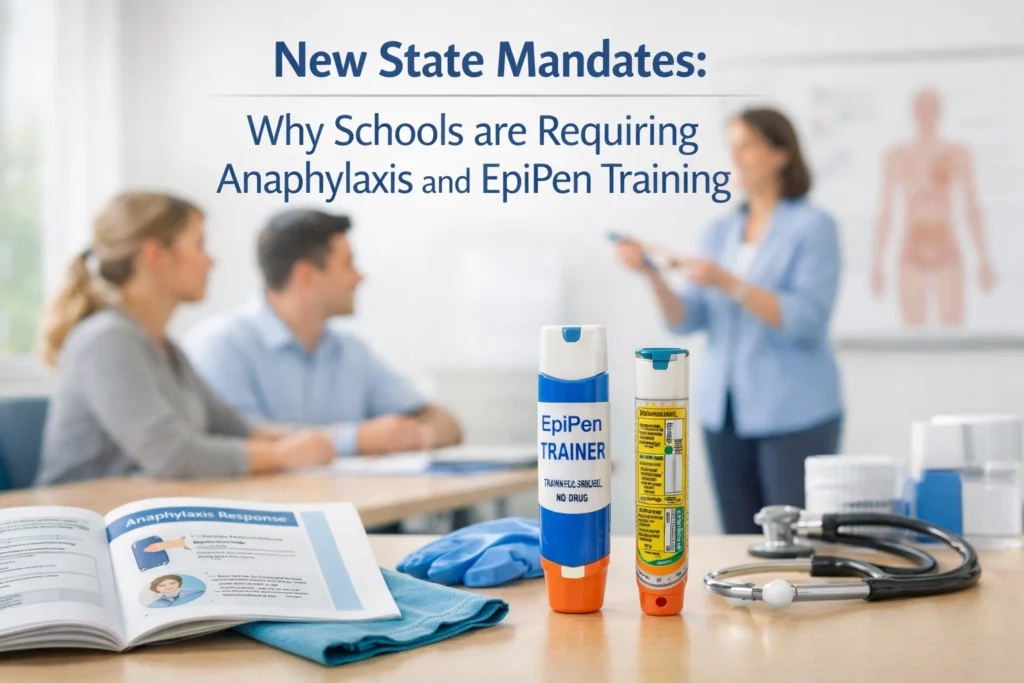
This is a high-importance advisory for school leaders, childcare providers, and parents.
The compliance environment has shifted. Following Florida’s Senate Bill 1514 (SB 1514), which went into effect October 1, 2025, multiple states now mandate anaphylaxis and EpiPen training for school and childcare staff.
The medical standard is clear: the CDC, AAP, and AHA all agree that epinephrine is the first-line treatment for anaphylaxis and must be administered immediately. (CDC: https://www.cdc.gov/vaccines/covid-19/clinical-considerations/managing-anaphylaxis.html)
You do not have to “wait and see.” If you are responsible for children, you must assume anaphylaxis can happen without warning. The CDC is direct: “Epinephrine is the first-line treatment for anaphylaxis.”
Florida Compliance Notice: SB 1514 (Deadline: October 1, 2025)
If you are a Florida K–8 school administrator, educator, or after-school program leader, treat this as time-sensitive.
Florida’s Senate Bill 1514 (SB 1514) requires training so staff can:
- Recognize anaphylaxis
- Administer an epinephrine auto-injector
- Respond immediately while EMS is en route
External coverage has highlighted the intent: allergic emergencies often occur in common school settings (cafeteria, playground, after-school activities) where a nurse may not be immediately available.
Action you should take now (Florida):
- Assign who must be trained (K–8 staff + after-school personnel).
- Schedule training.
- Document completion dates and keep records accessible.
- Confirm you have an emergency response plan for suspected anaphylaxis.
If you are asking, “Can we wait until a nurse is available?” You cannot. Guidance from national health authorities is consistent: epinephrine is the first-line treatment and delays increase risk.
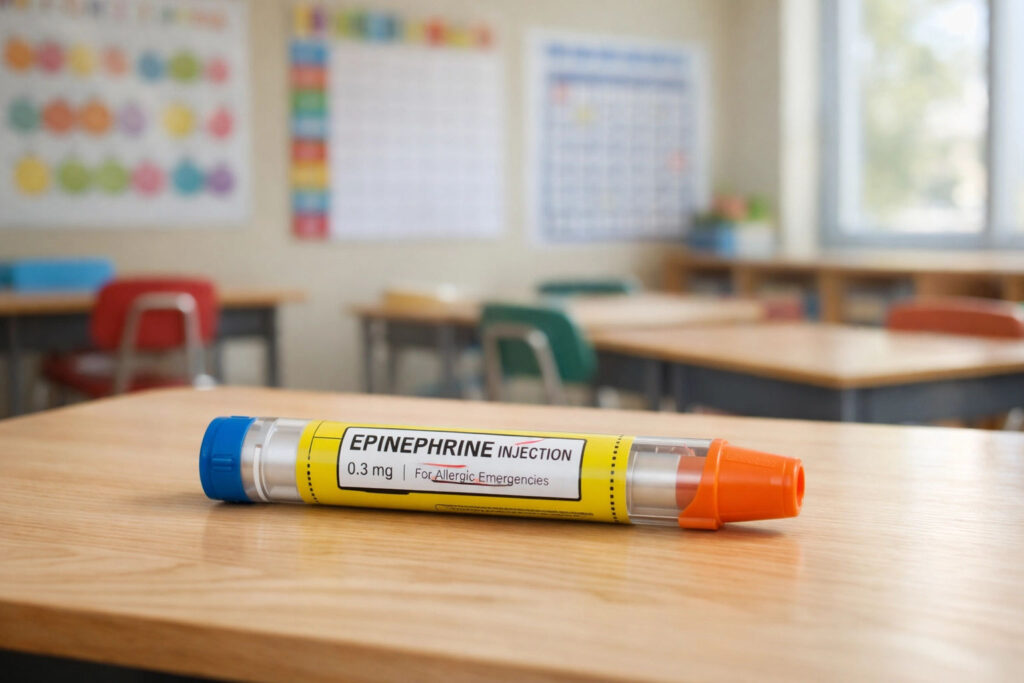
New York: Elijah’s Law (Childcare and School Safety Expectations)
New York’s Elijah’s Law raised the standard for allergy preparedness after a fatal preschool anaphylaxis event. If you operate a school or childcare program in New York, you are expected to maintain clear protocols for:
- Prevention
- Recognition
- Immediate response, including epinephrine use
For pediatric settings, the AAP is explicit in its school-focused allergy resources: epinephrine is the first-line treatment for anaphylaxis, and school readiness matters. (AAP: https://www.aap.org/en/patient-care/school-health/management-of-chronic-conditions-in-schools/allergy-and-anaphylaxis-management-in-schools/)
Expanded Mandates: Other States You Should Track (Training + Epinephrine Access)
This is not limited to Florida and New York. You should assume your state is moving in the same direction, or already there.
California: “Elijah’s Law” / AB 1651 (Epinephrine access + trained personnel)
California’s AB 1651 (often referenced as “Elijah’s Law” / the Muñoz SAFE Act) strengthens expectations around accessible epinephrine and expands who may administer it when trained. If you manage a California school site, your operational takeaway is simple: locked-away epinephrine and untrained staff are not acceptable risk controls.
Reference (bill information): https://leginfo.legislature.ca.gov/faces/billAnalysisClient.xhtml?bill_id=202320240AB1651
Virginia: Department of Education training resources and required training expectations
Virginia provides official guidance and training resources for school staff to recognize anaphylaxis and use epinephrine. If you are in Virginia, you should align local policy and annual training with the VDOE materials.
VDOE training page: https://www.doe.virginia.gov/programs-services/student-services/specialized-student-support-services/school-health-services/school-health-guidance-resources/anaphylaxis-epinephrine-training
Illinois: Dillon’s Law (expanded emergency epinephrine access + training emphasis)
Illinois’ “Dillon’s Law” efforts are widely cited in the broader national push to expand who can administer epinephrine in emergencies when trained, including in public settings such as schools. If you are in Illinois, check district policy and state guidance and treat training as a core requirement—not an optional add-on.
Example reporting: https://www.wrex.com/news/illinois-news/dillons-law-to-expand-access-to-epinephrine-unanimously-passed-by-illinois-assembly/article_f8532b50-73ab-4216-bf54-8137cf545c14.html
Bottom line: mandates differ by state, but the direction is consistent: trained staff + accessible epinephrine + documented procedures.
Why Early Recognition is Critical
Understanding the “why” behind these mandates requires a look at the clinical nature of anaphylaxis. Anaphylaxis is a severe, potentially life-threatening systemic allergic reaction. It can occur within seconds or minutes of exposure to an allergen, such as peanuts, tree nuts, bee stings, or latex.
When anaphylaxis begins, the immune system releases a flood of chemicals that can cause the body to go into shock. Blood pressure drops suddenly, and the airways narrow, blocking breathing.
Epinephrine is the only effective treatment for anaphylaxis. It works by:
- Constricting blood vessels to increase blood pressure.
- Relaxing muscles in the lungs to open the airways.
- Reducing swelling and hives.
The effectiveness of epinephrine is highly time-sensitive. If administration is delayed, the symptoms can become irreversible. This is why state mandates focus on teachers and after-school staff; they are the individuals most likely to be present during the initial onset of symptoms.

Recognizing the Signs of Anaphylaxis
Training is not just about the mechanics of the device; it is about the “if/then” decision-making process. You must be able to identify symptoms across different systems of the body.
If a student exhibits a combination of the following, you must act:
- Skin: Hives, itching, or redness; swelling of the lips, tongue, or throat.
- Respiratory: Wheezing, shortness of breath, or a repetitive “barking” cough.
- Gastrointestinal: Nausea, vomiting, or severe abdominal pain.
- Cardiovascular: A weak pulse, dizziness, or fainting.
A common misconception is that a student must have all of these symptoms to be in danger. In reality, any rapid onset of respiratory distress or a combination of symptoms after exposure to a known allergen constitutes a medical emergency.
How to Respond: The Administration Process
While different auto-injectors may have slight variations in design, the general procedure remains consistent. If you are a teacher or staff member in a mandated state, you must be familiar with these steps:
- Identify the emergency: Confirm the student is experiencing anaphylaxis.
- Call 911 immediately: Even if epinephrine is administered, professional medical follow-up is required.
- Prepare the device: Remove the safety cap (usually blue) while avoiding touching the needle end (usually orange).
- Administer the injection: Press the tip firmly against the outer thigh. You can do this through clothing if necessary. Follow the specific instructions on the device.
- Hold in place: Hold the device for the duration specified (usually 3 to 10 seconds depending on the brand) to ensure the full dose is delivered. Follow the specific instructions on the device.
- Monitor the student: Keep the student lying down with their legs elevated until EMS arrives.
Training Advisory: Use a Course You Can Deploy Immediately (Free Option Available)
If you need to train staff quickly—especially with Florida’s October 1 deadline—you need a course that is immediate, trackable, and consistent.
Use this direct link to the American BLS course:
https://www.americanbls.com/courses/anaphylaxis-management-emergency-response-course/
Important: A free version of this course is available. Certification is optional for a fee if your employer or state documentation standards require it.
What you should expect your training to cover (minimum):
- Recognize anaphylaxis fast (multi-system symptoms)
- Use an epinephrine auto-injector correctly
- CALL 911 and follow the emergency response sequence
- Document training completion for compliance
Final Notice: What You Should Do This Week (Schools + Parents)
If you are responsible for a school, a program, or a child, treat anaphylaxis readiness like you treat AED readiness: it must work on the first attempt.
If you are a Florida school/program leader, do this now:
- Set an internal deadline.
- Train all required staff and after-school personnel.
- Verify epinephrine access and where it is stored.
- Run a simple drill: If symptoms start, who CALLS 911, who GETS epinephrine, who ADMINISTERS, who MEETS EMS?
If you are a parent, do this now:
- Ask your school who is trained to administer epinephrine.
- Ask where epinephrine is stored and how quickly it can be accessed.
- Confirm there is a written allergy action plan on file if your child has known allergies.
Remember the clinical standard from national authorities:
- CDC: “Epinephrine is the first-line treatment for anaphylaxis.” (https://www.cdc.gov/vaccines/covid-19/clinical-considerations/managing-anaphylaxis.html)
- AAP school resources emphasize epinephrine as first-line and school readiness. (https://www.aap.org/en/patient-care/school-health/management-of-chronic-conditions-in-schools/allergy-and-anaphylaxis-management-in-schools/)
- AHA First Aid Guidelines: anaphylaxis response includes early epinephrine use. (https://cpr.heart.org/en/resuscitation-science/2024-first-aid-guidelines/)
If you need immediate training deployment (free option available), use:
https://www.americanbls.com/courses/free-anaphylaxis-training-course/
For school-wide or corporate solutions:
- https://www.americanbls.com/corporate-cpr-training/
- https://www.americanbls.com/contact-information/
Sources
- Fox 13 News: https://www.fox13news.com/news/new-florida-law-requires-epipen-training-k-8-teachers-protect-students-severe-allergies/
- CDC: https://www.cdc.gov/vaccines/covid-19/clinical-considerations/managing-anaphylaxis.html
- https://www.aap.org/en/patient-care/school-health/management-of-chronic-conditions-in-schools/allergy-and-anaphylaxis-management-in-schools/